Quick answer: to remove a rounded bolt or stripped nut, work from least to most aggressive — soak it in penetrating oil, then try locking pliers with curved jaws for extra grip, then a bolt/screw extractor socket that bites into the rounded head, and use carefully applied heat as a supporting step to break corrosion loose. Skip straight to a hacksaw or angle grinder only if the fastener is being scrapped anyway and cannot be reused. As a hand tool manufacturer, our advice is to always start gentle and escalate only as needed — the more aggressive methods make the head smaller and harder to grip if they fail.
Why bolts and nuts round off
A fastener rounds off when the tool applying torque loses its grip on the flats or corners before the fastener actually turns — usually because of corrosion, over-tightening, using the wrong size tool, or a low-quality fastener with soft corners to begin with. Once the corners are worn smooth, a standard wrench or socket has nothing left to bite, and simply forcing a normal tool harder tends to round it off further rather than loosen it. The fix is to switch to a tool or technique built specifically to grip a damaged or rounded head, not to apply more force with the same tool.
Method 1: penetrating oil
Before any mechanical method, apply a penetrating oil to the fastener and the surrounding threads and let it soak — typically 15–30 minutes, longer for badly corroded fasteners, and ideally repeated a few times. Penetrating oil works by capillary action, wicking into the microscopic gap between the fastener's threads and the surrounding material to break down rust and reduce friction. This step alone often loosens a seized fastener enough that the next method succeeds on the first try, and it costs nothing to attempt first.
Method 2: curved-jaw locking pliers
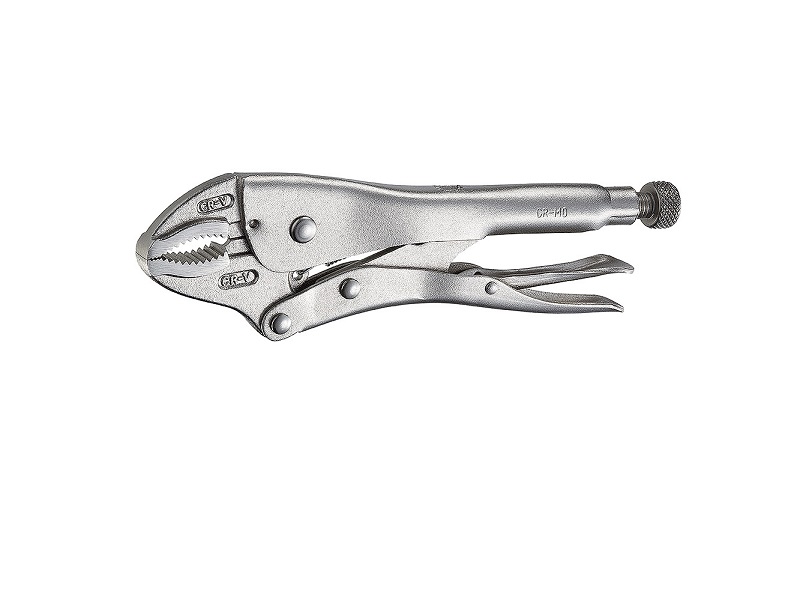
Locking (vise-grip style) pliers with curved jaws are one of the most effective hand tools for a rounded fastener, because the curved profile contacts the round, worn head at multiple points rather than trying to find flats that no longer exist cleanly. To use them: open the adjustment screw, clamp the jaws around the fastener, and tighten the screw until the handles snap past their locking point, gripping the head under spring tension. If the head is too smoothly rounded for even curved jaws to bite, use a file to flatten two opposite sides of the head first — this gives the pliers a real surface to clamp onto rather than a fully round profile. Turn the pliers by the handle in the loosening direction; do not over-tighten the adjustment screw beyond what is needed to grip, as excessive clamping force can distort the jaw geometry over time.
It is worth being clear that locking pliers are a rescue tool, not a routine one: using them on a healthy, un-rounded fastener is itself a common cause of rounding it off, so reach for the correct wrench or socket first and keep locking pliers in reserve for fasteners that are already damaged.
Method 3: bolt/screw extractor sockets
Purpose-made extractor sockets have reverse-tapered, spiral-cut internal teeth that grip a rounded head as you turn — the more torque you apply, the tighter the internal teeth bite into the fastener. They fit onto a standard ratchet like a normal socket and are sized to match common bolt and nut dimensions, making them a good option when a fastener is too rounded for pliers to grip but still has enough head profile for a socket to seat over.
This is a different tool from the tapered, drilled-in screw extractor used on a broken or badly stripped screw head that no longer has an external profile at all — that method requires drilling a pilot hole into the fastener itself and is covered step by step in our guide to how to use a screw extractor set. As a rule of thumb, try an extractor socket first if any part of the original head shape survives; move to a drilled-in extractor once the head is too damaged, sheared off, or worn smooth for any socket to seat on.
Method 4: controlled heat
Heat applied to a seized fastener (with a heat gun or, where safe, a small torch) causes the metal to expand slightly, which can crack the grip of rust or thread-locking compound. Letting the fastener cool afterward, or shocking it with penetrating oil right after heating, exploits the contraction to help break the bond further. Heat should be used carefully: keep it away from fuel lines, plastics, seals, paint, and any flammable material nearby, and never combine heat with penetrating oil while actively heating, since most penetrating oils are flammable.
Choosing a method
| Method | Best for | Key caution |
|---|---|---|
| Penetrating oil | First step on any seized or rounded fastener | Needs soak time; not a fix on its own for badly rounded heads |
| Curved-jaw locking pliers | Rounded heads that still have some irregular profile to grip | File flats onto the head first if fully smooth; do not over-clamp |
| Extractor socket | Rounded heads too smooth for pliers but still socket-shaped | Match socket size closely to the fastener |
| Controlled heat | Corrosion-seized fasteners, used alongside the methods above | Keep clear of fuel, plastic, and flammable oil while heating |
Preventing rounded fasteners in the first place
Most rounded bolts and nuts are preventable: use the correct size wrench or socket (not an imperial tool forced onto a metric fastener or vice versa), avoid worn or low-quality tools with rounded corners of their own, do not over-torque fasteners beyond spec, and apply penetrating oil to fasteners you already suspect are corroded before you ever put a tool on them. A few seconds of prevention is far less work than any of the recovery methods above.
Source the right tools from the manufacturer
Transtime Tools manufactures curved-jaw locking pliers for gripping rounded and damaged fasteners, and a 6-piece screw extractor set for broken or badly stripped fasteners. If you are an importer, distributor, or industrial buyer and need sizing charts, material specifications, or OEM packaging, request a quote or contact our team and we will help you specify the right tool for the fastener you are dealing with.