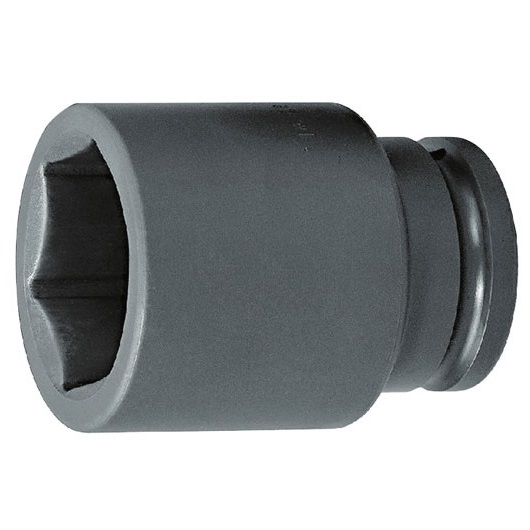
Quick answer: Chrome vanadium (Cr-V) and chrome molybdenum (Cr-Mo) are both low-alloy chromium steels, but they earn their keep in different jobs. Cr-V is heat treated toward the harder end of the tool-steel range, takes a bright chrome polish well, and is the standard choice for hand-driven wrenches and sockets. Cr-Mo is formulated and tempered to favor toughness and fatigue resistance, which is why it is the standard alloy for impact sockets and impact accessories that absorb repeated hammer-blow loading from a power tool. The two alloys are chemically close cousins — the practical difference a buyer feels comes from a combination of alloy choice, heat treatment, and wall thickness, not from vanadium or molybdenum alone. As a manufacturer, deciding which alloy and temper to use for a given part is one of the first decisions we make before a tool is ever forged.
What Cr-V and Cr-Mo steel actually are
Chrome vanadium steel is a chromium steel with a small addition of vanadium — typically in the region of 0.15–0.25% — alongside roughly 0.4–0.5% carbon and about 0.8–1.1% chromium, plus manganese and silicon. It belongs to the family of alloys the SAE groups under its 61xx chromium-vanadium series. Chrome molybdenum steel swaps vanadium for molybdenum, at broadly similar carbon and chromium levels, and sits closer to the SAE 41xx chromium-molybdenum family used widely in tubing, fasteners, and tooling. In both cases, tool manufacturers often work from proprietary mill chemistries formulated to the same general profile rather than an off-the-shelf SAE grade, but the underlying metallurgy is the same story: a small amount of vanadium or molybdenum added to a chromium steel to change how it responds to heat treatment.
Why Cr-V is the standard for hand-driven tools
Vanadium refines the steel's grain structure and helps it respond to heat treatment with high hardness and good wear resistance. That lets a wrench or hand socket be tempered toward the harder end of the useful hardness range, which helps it hold precise jaw or drive dimensions under torque, resist rounding on a stubborn fastener, and take a bright, mirror-polished chrome plating well. Combined with an established global supply chain and lower relative cost, this is why Cr-V has become the default alloy for hand wrenches, hand sockets, ratchets, and similar tools that are driven by a person's arm rather than a hammering power tool. It is also a large part of why Cr-V hand tools are so commonly chrome plated: a harder base metal takes and holds a bright electroplated finish better than a softer one, which is one reason the alloy and the classic shiny chrome look have become associated with each other in buyers' minds, even though the alloy and the plating are technically two separate choices.
None of this means Cr-V cannot take a hit at all — quality Cr-V hand tools are still expected to survive normal hand use, occasional light shock, and the kind of proof-load and impact testing called for under standards such as the ASME B107 series. The distinction is one of degree and intended duty cycle: Cr-V is tempered and tested for the loading a hand tool actually sees, not for the sustained, repeated hammering of a power tool.
Why Cr-Mo is the standard for impact-rated tools
Molybdenum improves hardenability and lets the steel be tempered at a higher temperature while still holding useful strength, which produces a microstructure with more retained toughness at a given hardness level than a comparably hard Cr-V part. That matters because an impact wrench does not apply a smooth, steadily rising torque the way a hand does — it delivers rapid rotational hammer blows, thousands of short shock pulses rather than one steady twist. A socket built for that job needs to flex slightly and absorb repeated shock without cracking, which is why impact sockets and impact accessories are made from Cr-Mo and deliberately tempered toward the tougher, somewhat lower-hardness end of the range rather than the hardest number the steel can reach. We cover the hardness side of this trade-off in more depth in our guide to tool hardness (HRC) explained.
The nuance: alloy chemistry isn't the whole story
It is worth being precise here rather than overselling the alloy label. Chemically, Cr-V and Cr-Mo tool steels are close: the headline difference is often well under half a percent of vanadium versus molybdenum, and some manufacturers and metallurgists argue that on paper the two alloys can perform similarly if both were heat treated to the same target hardness and toughness. In practice, what actually separates a tool that is safe to hammer on from one that is not is the combination of alloy choice, the temper the manufacturer targets, and the wall thickness and geometry designed into the part — not simply whether the label says Cr-V or Cr-Mo. That is why a socket's impact rating should always be confirmed from its markings and the manufacturer's specification, not assumed from the alloy name alone.
Cr-V vs Cr-Mo at a glance
| Property | Chrome Vanadium (Cr-V) | Chrome Molybdenum (Cr-Mo) |
|---|---|---|
| Key alloying element | Vanadium (~0.15–0.25%) | Molybdenum (~0.15–0.30%) |
| Heat-treatment emphasis | Tempered toward higher hardness for wear resistance and dimension retention | Tempered toward higher toughness for shock and fatigue resistance |
| Typical finish | Bright chrome plating | Black oxide or manganese phosphate (matte black) |
| Typical products | Hand wrenches, hand sockets, ratchets, hex keys | Impact sockets, impact extensions, impact accessories |
| Rated for impact wrench use | No — not designed for hammer-blow loading | Yes — this is the alloy's intended job |
The pattern to remember is directional rather than a strict numeric rule: the alloy and the temper both shift toward toughness as a part moves from hand-driven use toward repeated impact loading.
How Transtime Tools chooses between them
Transtime Tools forges wrenches, sockets, and accessories in-house from both Cr-V and Cr-Mo alloy steel, matching the alloy and heat treatment to how the finished part is actually meant to be used — hand torque versus impact — rather than defaulting to one alloy across the whole catalogue. You can see our forging, heat treatment, and finishing process on our manufacturing capabilities page, browse our hand socket sets for hand-driven applications, or check our impact socket sets for power-tool use. If you are sourcing for import, distribution, or private label and need material certificates or spec sheets for either alloy, request a quote or contact our team.